Visar inlägg med etikett PhD. Visa alla inlägg

söndag 5 november 2017

Proofreading: "Excuse the coffee, please!"


It IS Sunday, but considering that fact that I took almost all Wednesday off this week (All saints/holiday in Spain), and made time for a really long walk today, I actually don´t mind doing some work this afternoon. Some days ago I received the proof/comments from the editor of a text which will be included in an anthology produced/compiled by my department. It is called “Allvarligt talat”/”Seriously (speaking)”, and my contribution is focusing on Agda Montelius, who was married to the archaeologist Oscar Montelius, and her travels and work together with him during the 1870´s and 1880´s. To treat myself –even if I really enjoy today´s task- I decided to move my office to a proper environment, i.e. a bar/café from the late 19th century… I mean, why not work in an (almost) authentic environment if one has the chance? I moved from one to another, since the first one got a bit too noisy after a while… It´s fantastic that there are still quite a few of these old and more or less authentic interiors left in Barcelona.

Bar Muy Buenas
Bar Casa Almirall


As some of you already know, I am writing my thesis about international archaeological networks etc in the late 19th century, focusing on Oscar Montelius (and Agda), and the source material includes loads of documents from the Montelius´ archives. During my last visit to the archive (in Stockholm) I came across a document that was not of interest to my current study, but still caught my interest. It was a proof, commented by Oscar to be sent to the translator of one of his publications. There are certain moments when you feel extra close to your study object, and this was one of these times. Just like I am this afternoon, Oscar was proofreading and all of a sudden he spilt his coffee on the script. No computers, no printers, so he had to keep the script as it was… Coffee stains and all...

"EXCUSE THE COFFEE PLEASE!"
Ref: Oscar Montelius arkiv, Antikvarisk-topografiska arkivet, Sthlm
 

måndag 17 april 2017

My PhD: Writing your dissertation in 15 minutes a day

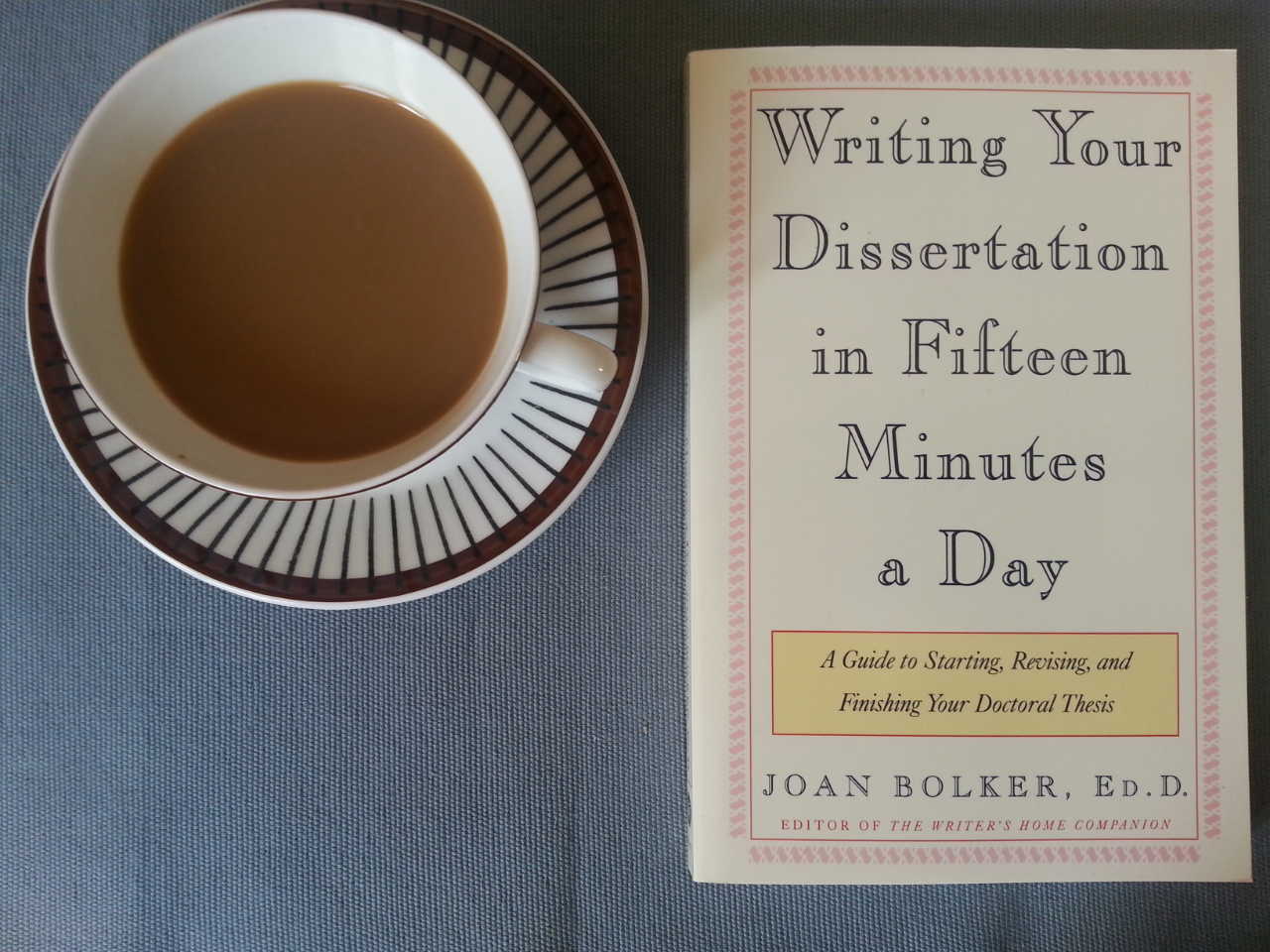
Today I would like to share a book tips with all of you: Writing your dissertation in fifteen minutes a day by Joan Bolker. 
I was recommended this title by another PhD candidate (thanx Minna!), checked it out at the library and decided to get my very own copy. It is a pretty quick read, only 150 pages . The title is of course a bit misleading, it is not about actually writing a thesis in just 15 minutes a day. It is about creating a writing habit and finding your own preferable work style. "Writing in order to think" might be my favourite advice.

Reading this book is a bit like having a conversation with a friend about writing. Bolker is adressing everything related to the writing process, from psychological aspects to dealing with distractions. She provides different methods for creating a work flow, such as free writing (but also a little less free writing, which might work better for some people.) I find it quite useful to re-read the different chapters now and then since Bolkers tips and advice might be seen in different light depending on where one is in ones writing process and which problems that might have surfaced. The book was written in 1998 which means the section on computers is outdated, but it doesn´t matter. I think this book applies to any larger writing job and is a great book for all writers :-)

torsdag 9 mars 2017

My PhD: A research visit to Barcelona


I am currently a member of the Swedish National graduate school of historical studies. The research school provides a lot of great possibilities for international exchange and I have been lucky enough to receive a travel grant, which allows me to spend a few weeks abroad at a university of my own choice. One of the places I really wanted to go to was the University of Barcelona, where a certain professor who is working on the history of archaeology is affiliated. She has great experience of digging into archive material, and is/was the supervisor of several PhD candidates working on heritage issues and related areas. I was therefore of course very grateful when I got accepted as a guest researcher.  At this point I am almost halfway through my studies and this is a very good time to discuss and review research questions, methodology and different problems. 

So, what does it mean to be a guest PhD student/researcher? It is very much up to you and your so-called sponsor, in this case the above-mentioned kind professor.  I will take the opportunity to discuss as much as possible with her about certain aspects on theory and methodology, but also about my thesis topic in general and about her work. I am also planning to get a decent number of pages written. Being away from the normal curriculum as well as meetings and seminars at my home department will be a perfect opportunity to do some really contcentrated work., I hope... I will also ge to meet other PhD students and have the possibility to attend open lectures. I feel very welcome here, and I have daily contact with both the professor and another PhD candidate who has been helping me to settle in and feel at home. In addition I will take the chance to enjoy museums, archaeological sites and exhibitions, as well getting to know the fantastic city of Barcelona a bit better!
The university


söndag 6 november 2016

My PhD: A healthy PhD?

So, I guess everyone is dying to hear how the Happy PhD online-course is going? Well, it is going ok! There have been some "obstacles" along the way due to illness, a conference, travelling etc. However, I decided to follow the normal course pace and read the daily texts, but allowing a slower pace in implementing and trying out the suggestions and methods. One can always go back and repeat (I think one should go back and repeat) and the course material will still be accessible after the six weeks, thanks Amber! 

The first weeks were mainly about focusing on one´s mental and physical health. A lot of obvious things; well-known  facts and good habits we  already know about, but need to be reminded of. Amber explains very well how exercise as well as rest and relaxation is connected to successful brain-work. (Anyone -especially any archaeologist- can probably relate to how one feels in mind and body after a day of field work compared to a day of desk work.)

Yes, we might already know it, but being reminded of HOW important these factors are, might actually make us allow ourselves to take better care of our brains instead of adding an evening shift (and a night shift) to our work day...  I will not go into details, but one result is that I seem to be getting better at taking short breaks regularly. I always go for walks, but during the past weeks I have implemented more "walking breaks" during the work day and if possible I have taken 2 instead of 1 walks per day. The fact that I spent half October in Rome (where one always walks a lot), living next to a nice park has of course facilitated taking "walking breaks" during the work day. I hope I will be able to keep it up somehow, despite dreadful "Gothenburgian" weather...  

Some of the faces in Villa Borghese
Coffee break,  Casa del Cinema, Villa Borghese


torsdag 6 oktober 2016

My PhD: A Happy PhD?

There are many blogs, books and websites on PhD related topics, such as how to write a thesis, how to manage life as a PhD student and how to stay sane in academia. The Happy PhD, run by Amber Davis, is on my top list. I subscibed to the Happy PhD mailing list quite some time ago and I really like the strong focus on how to stay healthy while doing a PhD, as well as Amber´s hands-on tips. I will not write much more about the content of her page just now, you can check it out yourself here. After recently taking part in a 1-week challenge or activity that Amber Davies calls "The Nudge", on how to shorten your work day, I decided to step it up and take a Happy PhD online course. It is a self study course which runs over 6 weeks aiming to create a less stressful and more focused (work)life.


This week hasn´t been the best... I have been ill and because of that falling behind at work, starting to feel stressed... and felt I really shouldn´t have started something like this course just yet. Not THIS week. Maybe next week. Then it hit me. Of course this IS a PERFECT week to start :-) 

Well, so far, so good... I`ll keep you posted...  


söndag 8 februari 2015

Marzabotto Tur och Retur. Del I.

Den här dagen var det dags för en utflykt till den lilla orten Marzabotto, som ligger en bit söder om Bologna. Där finns en etruskisk stad med två intilliggande begravningsplatser, nekropoler, samt ett litet museum som visar fynd från utgrävningar som gjorts på platsen. Lämningarna upptäcktes i mitten av 1800-talet, när markägaren och godsherren Chevalier Giuspeppe Aria skulle plantera några mycket stora träd. Så småningom anlitade familjen Aria en god vän, greven Gozzadini, att leda utgrävningar i området. Aria inrättade en sorts museum i sitt eget hem och Gozzadini författade en omfattande katalog över de arkeologiska fynden. Idag pågår utgrävningar i Marzabotto i liten skala under ledning av Bolognas universitet.

Under den arkeologiska kongressen i Bologna 1871 reste delegaterna (den 5 oktober) till Marzabotto i ett extrainsatt tåg, bekostat av Aria, för att beskåda och diskutera lämningarna. Källmaterialet jag använder i min forskning består bland annat av reseskildringar, som den skriven av museimannen Magnus Lagerberg. Han ingick liksom Oscar & Agda Montelius samt Hans & Elin Hildebrand i den svenska delegationen under Bolognakongressen 1871 och har skrivit om sina minnen därifrån . 

Lagerberg beskriver livfullt hur exkursionen gick till: Om man de föregående dagarna haft att fröjda sig åt den blåa italienska himlen, fick man idag lära känna, att Jupiter Pluvius ännu kan visa sin makt. Så snart jernvägståget stannat och resenärerna utstigit, började från en närbelägen kulle att uppsändas raketer, försedda med starka knallsatser, hvilka likt kanonskott helsade oss välkomna. Detta saluteringssätt fortfor, utan uppehåll,  hela dagen, och genom det starka eko, bergväggarne lemnade, gjorde det ett ståtligt intryck. Regnet fortfor ännu”

Till skillnad från det regnväder som drabbade resenärerna 1871, så lämnade vi Bologna i strålande solsken. Det hade dock snöat en hel del, så utflykten var lite av en chansning. Vi ville gärna se museet och själva platsen, även om det troligen inte skulle gå att se särskilt mycket av de arkeologiska lämningarna. Efter att ha beundrat floden Reno och ett snötäckt landskap med bergskedjan Apenninerna i fonden, så klev vi av tåget i Marzabotto efter knappt 40 minuter. Efter ytterligare knappt en halvtimme lyckades vi till slut hitta ett ställe som inte var stängt där vi kunde få oss något till livs. På Osteria di Marzabotto var köket inte öppet, men det gick att få en fin tallrik med bröd, ostar och kallskuret. Man ska vara mätt när man går på museum!

För kongressdelegaterna del, så berättar Lagerberg vidare hur de anländer till Arias slott och där först studerade de utställda arkeologiska fynden. Under tiden hade det slutat regna, och det stora sällskapet begav sig uti Arias park. Vid utgrävningarna hade Aria låtit uppföra ett etruskiskt tempel och mycket påpassligt lämnat två gravar tillräckligt utgrävda för att delegaterna skulle få möjlighet att ”avtäcka” dem. Det häftiga regnet hade gjort att schakten var hemskt leriga: ”...hvilket gjorde , att de besökande, då de väl kommit ned på botten af det vidsträckta rummet för utgräfningen, höllo på att fastna der, så att de, efter fulländat värf med grafvarnes öppnande, måste, under allmän munerhet, uppdragas ur gyttjan af dem, som ej vågat sig ned på djupet”

Etruskiska gravar. I bakgrunden lyxigt partytält för Chevalier Arias lunchgäster.

Lagerberg fortsätter att beskriva gravarna som innehöll skelett såväl som gravgåvor, och han gör anmärkningen att själva nekropolen på avstånd påminner om svenska kyrkogårdar från 1600-talet. En livlig diskussion bryter sedan ut på platsen om gravarnas ålder och ursprung. Det var vid det här tillfället inte klarlagt att det rörde sig om etruskiska lämningar och inte heller att det även fanns en antik stad i området. Senare på dagen bjöds det in till en luxuös lunch, alla deltagarländers flaggor vajade i vinden, en musikkår spelade musik från alla närvarande nationer (t. ex. spelades ”Ur svenska hjärtans djup”) och den italienske kronprinsen höll tal. När det var dags att bryta upp ledde inte bara en, utan TVÅ musikkårer vägen till tåget och ett fyrverkeri avslutade utflykten.

Ja, ni förstår vilka storslagna scener som ägt rum på denna lilla ort, och att vi verkligen såg fram emot att få besöka museet och platsen –om än snötäckt- för den numera bevisat etruskiska staden - även om inga knallskott och fyrverkerier väntade oss. 

Det gjorde däremot den här skylten:

Inte bara utgrävningen, utan också museet stängt på grund av snön. 

Jaha. Det var bara att ta tåget tillbaka till Bologna!

To be continued...